 global brain Network Research
on our journey of Millions of miles,
we have gone but a few miles in our
understanding of the human brain
Our Story
The Global Center is a partnership of the best Brain Network research and clinical laboratories in the world. There are 12 brain network research laboratories in all, each having industrial/clinical partners. Dr. Salvatore Domenic Morgera is Director of the Global Brain Network Research Center.
The Global Center emphasizes Mental Health and focuses on interdisciplinary approaches to understanding the complex interplay of factors contributing to mental well-being and illness.
The global mental health crisis continues to escalate, underscoring the urgent need for expanded efforts in basic research, clinical interventions, and long-term rehabilitation strategies. According to the WHO, approximately 970 million individuals were living with a mental disorder in 2019, a number that has surged in the aftermath of the COVID-19 pandemic. In North America, over 58 million adults experience mental illness annually. Europe reports high rates of depression and anxiety, affecting an estimated 84 million people. In Asia, over 250 million people are estimated to suffer from various mental health conditions.
These figures emphasize a pressing global health burden that cannot be resolved without a coordinated and interdisciplinary approach. Investment in basic neuroscience research, scalable clinical interventions, and robust rehabilitation systems is crucial for understanding the biological underpinnings of mental illness and for ensuring recovery, social reintegration, and improved quality of life for millions worldwide.









research & development areas
Neurobiology and Biomarkers of Mental Illness Brain Mechanisms Underlying Complex Behaviors
Genetics, epigenetics, and environmental factors Genetic and Epigenetic Influences
Technology and computational approaches Artificial Intelligence (AI) and Machine Learning
Intervention development and clinical application Developing Novel Interventions
Public health and prevention Public Health Promotion Strategies
Interdisciplinary collaboration and training Fostering Interdisciplinary Collaboration
our latest breakthrough –
Brain Subsystem chips
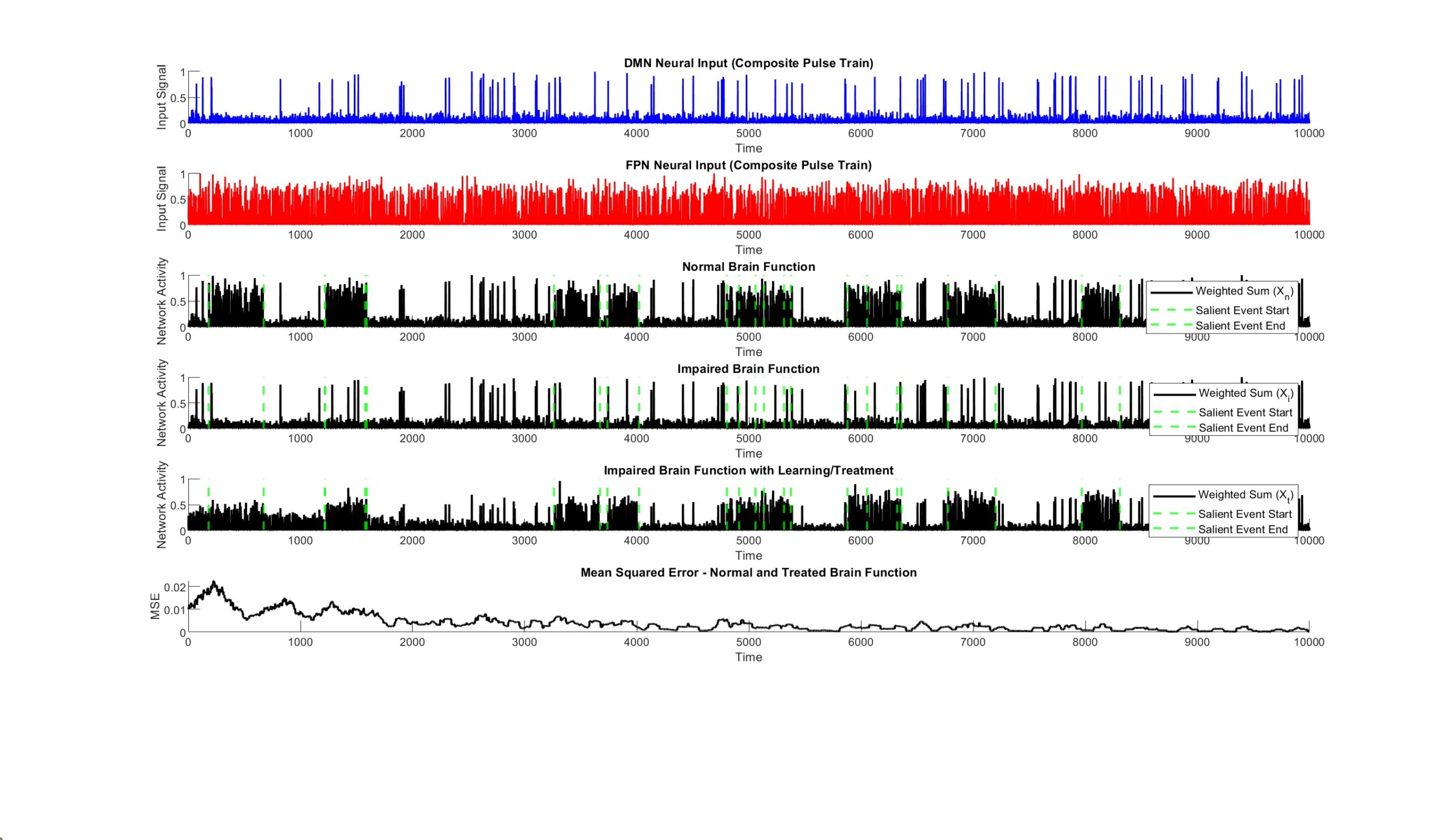 Comparison of Neural Signals for Healthy and Impaired Human Brains under Sensory Excitation Protocols
The salience network Chip
Understanding the human brain’s salience network is crucial to advancing the diagnosis and treatment of mental disorders, as this network plays a key role in detecting, filtering, and responding to emotionally and behaviorally relevant stimuli. It acts as a dynamic switch between the brain’s default mode and executive control networks, governing how individuals shift attention and regulate internal states. Disruptions in the salience network have been strongly linked to conditions such as depression, anxiety, schizophrenia, and autism, where individuals struggle to appropriately process or respond to emotional and social cues. By decoding the structure and function of this network through neuroimaging, computational modeling, and biomarker analysis, researchers and clinicians can develop more precise diagnostic tools and personalized therapeutic interventions, ultimately improving outcomes for those affected by complex mental health conditions.